Buses are Japan's underrated workhorse. In the countryside they go where trains don't. Between cities, highway buses cost a fraction of the Shinkansen. Overnight buses even save you a night's accommodation.
They're clean, punctual and safe. Here's what you need to know.
Typical figures for one adult. Prices vary by operator, day and season.
City & local buses
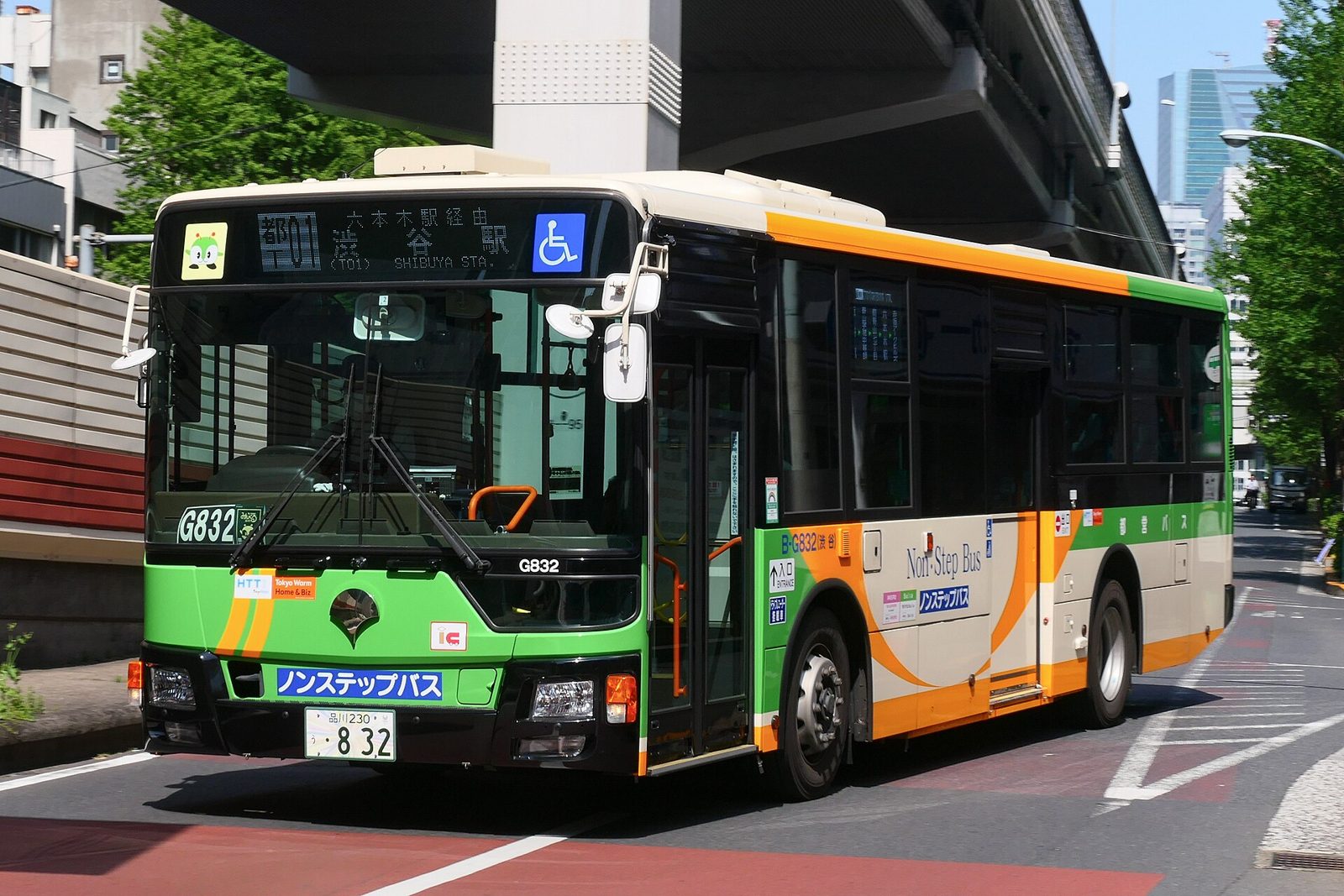
There are two systems, and the sign by the door usually tells you which one you're on:
| System | Where | How |
|---|---|---|
| Flat fare, pay on entry | Tokyo (Toei and most city buses) | Board at the front, tap your IC card or pay cash next to the driver, exit through the middle door |
| Distance fare, pay on exit | Many other cities and most rural areas | Board in the middle, tap your IC card or take a numbered ticket (整理券), check the fare board at the front, pay when you get off at the front |
- Press the stop button before your stop (とまります lights up)
- The fare box changes ¥1,000 notes and coins, but not ¥5,000 or ¥10,000 notes
- IC cards work on almost all city buses. On rural buses carry coins
- Rural buses can be rare (a few per day) and stop early in the evening. Check the timetable at the stop or on Google Maps
Highway buses
Highway buses (高速バス kōsoku basu) connect cities and tourist spots, often from big terminals like Busta Shinjuku in Tokyo. Seats are reserved, there's usually a toilet on longer routes, and your big bag goes in the hold.
| Useful routes | Time | Why the bus |
|---|---|---|
| Shinjuku → Lake Kawaguchiko (Mount Fuji) | ~2 h | Faster and cheaper than the train |
| Fukuoka → Yufuin | ~2 h 20 | Direct, half the price of the sightseeing train |
| Fukuoka → Beppu / Nagasaki | ~2 h 30 | Cheap alternative to limited expresses |
| Kumamoto → Takachiho | ~3 h | No train goes there |
| Matsuyama ⇄ Kochi | ~2 h 30 | Shikoku's cities by bus |
- Book on Japan Bus Online, Highway Buses (Willer) or Kosoku Bus, all in English, many with foreign cards
- Some routes are first come, first served. Others need a reservation, especially at weekends
- Arrive 10–15 minutes early. The bus leaves on time, without you
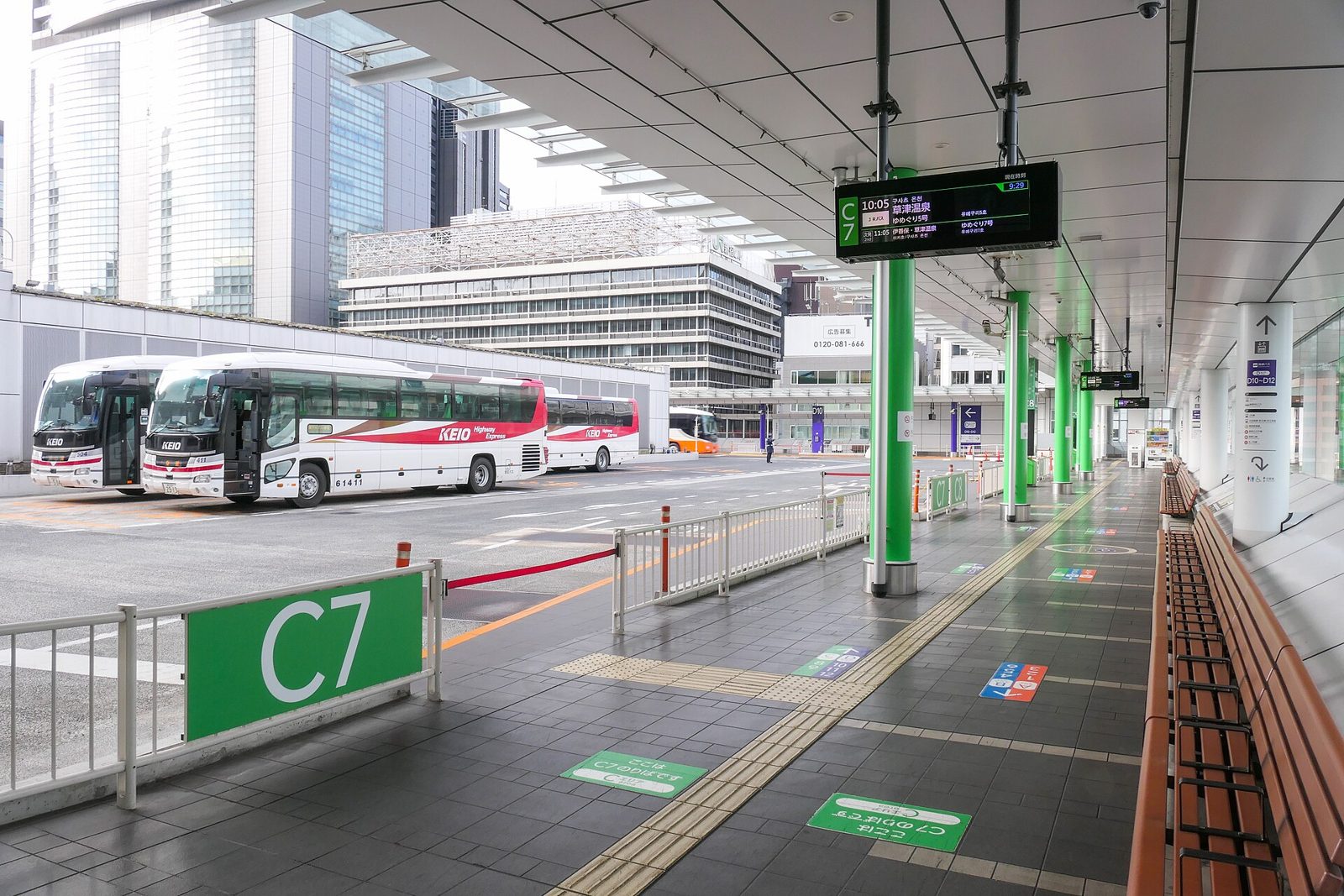
Overnight buses: what it's really like
Night buses (夜行バス yakō basu) run between the big cities, typically leaving at 21:00–23:00 and arriving at 6:00–7:30. Tokyo → Osaka or Kyoto takes about 8 hours.
| Seat type | Layout | Typical price Tokyo → Osaka |
|---|---|---|
| Standard | 4 across, light recline | ~¥4,000–7,000 |
| Relax / 3-row | 3 single seats with aisles, curtains, deep recline | ~¥7,000–11,000 |
| Premium / private | Cubicles with doors or shells (e.g. Dream Sleeper, Willer's premium seats) | ~¥12,000–20,000 |
Toilets
Most 3-row buses have one on board. Budget buses rely on rest stops every 2–3 hours.
Lights out
Curtains closed, phones silent, no calls. Bring an eye mask, earplugs and a neck pillow.
Women-only
Many operators offer women-only seat areas or whole buses.
Morning
Arrive at 6 am, store your bag in a locker, head to a morning onsen or sentō, then breakfast.
Shoes
Slip-on shoes make the night better. Many people sleep in socks.
Worth it?
Saves a hotel night and a day of travel. Take the 3-row seat if you want to function the next day.
Bus passes
- SUNQ Pass (Kyushu): unlimited highway and most local buses on Kyushu, some ferries too. All-Kyushu or Northern-Kyushu versions, 3 or 4 days. Great for a Fukuoka – Yufuin – Beppu – Kumamoto – Nagasaki loop
- Japan Bus Pass (Willer): a set number of days on Willer's highway and overnight network
- City day passes: most cities sell 1-day bus or bus + subway passes, worth it from about 3 rides
Airport buses
Airport limousine buses link Haneda, Narita and Kansai Airport with major stations and many big hotels. They're great with luggage, and you don't have to haul bags through the subway.
Comments
Questions, tips, your own experience?
Done this route, planning it, or found a great ryokan I missed? Leave a comment below. Please keep it friendly and on topic.
The comment section switches on as soon as Tabi Notes is live.